
 Share
Share
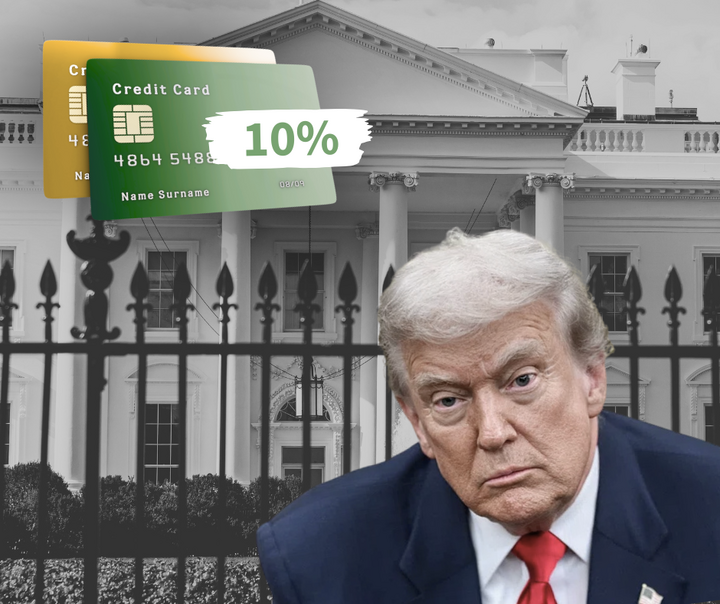
In January 2026, President Trump announced support for a one year cap on credit card interest rates at 10%. The announcement drew immediate responses from consumer advocates, banking institutions, and lawmakers across the political spectrum. Supporters say it would save Americans billions in interest. Institutions that issue credit say it would reduce access for tens of millions of cardholders. Six months later, no cap is in effect, no legislation has passed, and the path forward remains uncertain.
This article is about giving you a clear picture of what this proposal actually is, where it stands, and what it could mean for access to business credit, even though the bill itself is written for consumers.
What Is the Trump Credit Card Interest Rate Cap?
The proposal has two parts that are easy to confuse.
The first is Trump's announcement. In January 2026, he called for a one year cap on credit card interest rates at 10%, effective January 20. He later said credit card companies would be "in violation of the law" if they did not comply. Legal analysts noted there was no such law for them to violate.
The second is the legislation already in Congress. Senators Bernie Sanders and Josh Hawley introduced S.381, the 10 Percent Credit Card Interest Rate Cap Act, in February 2025. That bill would cap rates for five years, not one. Representatives Alexandria Ocasio-Cortez and Anna Paulina Luna introduced a companion bill, H.R. 1944, in the House. Trump's announcement added political momentum to legislation that had been sitting in committee without movement for nearly a year.
Why Was This Proposed?
Americans are carrying $1.23 trillion in credit card debt as of early 2026, a record high. More than half of all cardholders carry a balance month to month rather than paying in full. At a 21% average rate, a household with the national average balance of roughly $11,500 pays close to $2,500 a year in interest alone.
That is the problem proponents are pointing to. Sanders, Hawley, and Trump come from very different places politically, but all three have framed the cap as protection for working families from interest rates that compound faster than most people can pay them down.
On the research side, Vanderbilt University published analysis estimating a 10% cap could save Americans close to $100 billion annually in interest payments. Vanderbilt's argument is that banks already earn significant revenue from merchant interchange fees, the swipe fees collected on every card transaction, and could absorb lower interest rates while remaining profitable.
Credit unions have also weighed in, but not in support of the cap. Their average classic card rate sat at 12.87% as of January 2026. A 10% ceiling would put their own card programs underwater.
How Credit Card Issuers Actually Operate
Understanding this debate requires understanding how issuers price credit. I have covered this in detail in Grit Daily and CardRates, and the mechanics matter more than most of the political coverage acknowledges.
Credit card companies extend capital to borrowers and collect interest while that balance remains unpaid. The rate a borrower receives reflects how likely they are to repay. Lower credit scores signal higher risk, so higher risk borrowers pay more. The reason is straightforward: a single default can wipe out the interest income earned from dozens of accounts that pay on time. That is not a margin story. That is the fundamental math of how credit is priced, and it is the part of this debate that rarely makes the headline.
Here is where the math on a 10% ceiling breaks down. Banks borrow the capital they lend at rates tied to the Federal Reserve's prime rate. Operating costs add another four to five percentage points. Charge-off rates on subprime accounts, the percentage of funds expected never to be repaid, run at approximately 9.3% according to Federal Reserve data. Add those together, and the cost of extending credit to a higher-risk borrower already exceeds 10% before any profit margin enters the picture.
Under a hard 10% ceiling, issuers would be accepting a guaranteed loss on every dollar lent to those borrowers. According to the AAF's analysis of the proposal, only super-prime borrowers with scores above 800 currently receive rates near or below the proposed ceiling. That is a small slice of the cardholder market. Everyone else sits at rates that reflect a cost structure a 10% ceiling simply cannot support.
How Major Banks Responded
The nation's four largest card issuers went on record within days of Trump's January announcement, and the message was consistent across all of them.
JPMorgan Chase CFO Jeremy Barnum said the proposal would force the bank to significantly change and cut back its card business. He estimated that between 175 and 190 million American cardholders would lose access to their cards. JPMorgan CEO Jamie Dimon called the potential impact on subprime borrowers "dramatic." Citigroup CFO Mark Mason said the move would likely result in a significant slowdown in the economy. Bank of America CEO Brian Moynihan said the bank supported affordability but pushed back on the rate cap as the right way to get there.
The American Bankers Association went further. They collected data from card issuers representing roughly 75% of the U.S. credit card market between December 2025 and January 2026. The findings were stark.
Source: American Bankers Association, January 20, 2026
That last point is worth sitting with. The proposal is intended to help everyday Americans manage credit costs. The data suggests it would take credit away from the same people.
Does the Cap Cover Business Credit Cards?
This is the question business owners need a clear answer to. As the bill is currently written, dedicated business credit cards are not covered.
S.381 amends the Truth in Lending Act, known as TILA. TILA explicitly exempts credit extended primarily for business or commercial purposes. So the interest rate ceiling, in its current form, targets consumer accounts and not business credit card accounts.
That exemption does not mean you are off the hook, though. The effects would reach business lending through three real channels.
Three Ways the Cap Reaches Business Lending
1. The personal credit connection. Business credit cards are approved based heavily on your personal credit score. Federal Reserve data shows 40% of business owners apply using only personal credit, and 48% use a combination of both. If issuers raise qualifying thresholds across the board, business cards that are technically exempt could still tighten approvals. As I have written in Tampa Bay Business and Wealth, issuers look at creditworthiness first. When those standards shift industry-wide, they shift for all card types.
2. Sole proprietors using personal cards. Those are consumer accounts under TILA and would be directly covered. The Federal Reserve's own data shows 70% of nonemployer businesses used personal funds when facing financial challenges.
3. Indirect underwriting tightening. When issuers absorb major losses on consumer portfolios, they adjust their risk tolerance across everything they offer. Business card limits and approval standards can tighten without any legal mandate requiring it.
What the Research Shows About Small Business Credit Card Dependency
The reason all of this matters to business owners, even with the TILA exemption in place, comes down to one finding from the National Bureau of Economic Research.
Research Data
The NBER's July 2025 Digest analyzed transaction data from 1.6 million small businesses and found that 55% used a corporate credit card in the prior 12 months, compared to 27% for lines of credit and 26% for traditional loans. Credit cards are the most widely used financing tool for small businesses in America, and their use is most common among financially constrained firms that cannot access bank loans. A 5-percentage-point policy rate increase was found to reduce credit card balances by 15.75% and employment growth by 1.5% among the most exposed businesses.
Source: National Bureau of Economic Research, Credit Cards and the Financing of Small Businesses, July 2025The Federal Reserve Vice Chair for Supervision noted in a March 2026 speech that business credit card revolving balances have risen steadily since 2020. Businesses are leaning on cards more, not less, as other financing options tighten. A policy that restricts card access does not arrive in a vacuum. It lands on a small business community that is more dependent on this form of capital than at any point in recent history.
Where Shut-Out Borrowers Would Go Instead
Here is the part of this story that often gets missed. When borrowers lose access to regulated credit, they do not stop needing money. They find it somewhere else.
The AAF analysis found that borrowers pushed out of the banking system move to less regulated, far more expensive alternatives. Payday lenders in some states charge annualized rates above 300%. Merchant cash advances (MCAs), invoice factoring, and unregulated private credit markets all carry dramatically higher effective costs and far fewer protections than the card products they would replace.
This is not speculation. When Illinois enacted a 36% rate cap, Federal Reserve research found the cap decreased loans to subprime borrowers by 38% and increased loans to prime borrowers by 16%. Supply restriction does not eliminate demand. It redirects it.
The Federal Reserve Bank of New York's June 2026 research on three states that enacted 36% rate caps between 2016 and 2022 confirmed the same pattern. Open accounts among the least creditworthy borrowers dropped by roughly 20%. A 10% cap would produce a sharper version of that effect across a much wider population.
What Happens to Business Funding If the Cap Passes
The impact on business funding is not a simple reduction in interest costs. It is a restructuring of who qualifies for credit at all.
If your credit score is above 750, card access would likely remain available, but the terms would change. Rewards programs that businesses use to offset costs on software, travel, supplies, and vendor payments would likely disappear. When Congress capped debit card interchange fees in 2011 under the Durbin Amendment, debit card rewards collapsed within months. Analysis from the Kellogg School of Management found that produced a 30% decline in debit card payment volumes. A 10% interest rate cap removes the primary revenue source that funds rewards programs across the entire card market. Annual fees would likely rise for everyone to replace that lost revenue.
If your score sits between 680 and 750, the picture is more difficult. You currently qualify for the best 0% introductory APR business credit cards available today, the kind of access that makes business funding without collateral possible. Under tightened underwriting, this group could find itself priced out of those products even if card access remains technically available. The window for introductory offers would narrow.
If your score is below 680 or your credit profile is thin, the cap could effectively close the door on mainstream card products. These are the business owners with the fewest alternatives today. Restricting their card access does not eliminate their need for capital. It redirects them toward MCAs, invoice factoring, and private credit markets that cost far more than anything a 10% cap is designed to prevent.
If you have already experienced a credit card limit reduction, what is described above is a market-wide version of that experience.
What Happens to Business Owners Who Are Still Building Credit
This is the question that matters most for entrepreneurs who are actively working toward qualifying for business funding.
Right now, the pathways are clear. Disputing inaccurate items on your credit report can move your score meaningfully within months. Paying down revolving balances to bring utilization below 30% improves your positioning quickly. For owners with thin files, seasoning existing accounts and adding well-managed new ones builds the depth that issuers look for.
These strategies work because the current market still prices for a range of risk levels. A score of 680 has a path to 720. A score of 720 has a path to 750. Each step opens more options.
If a 10% cap passes and issuers raise their qualifying thresholds, that window compresses. The owner who has 18 months to work through a credit rebuild before applying today may find the target has shifted by the time they are ready. The urgency increases, not because the strategies change, but because the bar moves higher.
In my experience working with business owners across every stage of credit development, issuers focus on creditworthiness and repayment ability above everything else. That remains true regardless of rate policy. Building toward a strong profile now is what keeps the most options available.
The Counter-Argument
It is worth presenting the opposing case clearly.
Vanderbilt University researchers argue that banks generate enough revenue from merchant interchange fees on every card transaction to absorb lower interest rates and stay profitable. Their estimate of $100 billion in annual savings to consumers rests on the assumption that issuers would not significantly curtail access and would instead accept lower margins on a product line that still generates meaningful non-interest income.
The Consumer Bankers Association directly contested that conclusion. Their position is that the Vanderbilt model does not account for the real operational costs of extending credit to smaller and less established business entities. The ABA, Bank Policy Institute, and Consumer Bankers Association jointly warned that the interchange revenue argument applies better to large prime borrowers than to the higher-risk, lower-balance accounts that represent the majority of at-risk cardholders.
The debate between these two positions has not been resolved. Credible researchers disagree, and no definitive answer exists without seeing what issuers actually do under a binding ceiling.
Where the Proposal Stands Today
As of mid-2026, no cap is in effect. Rates have not changed. Trump's original January 20 deadline passed without any bank compliance or regulatory action.
In late April, Senator Elizabeth Warren sent formal letters to the Federal Reserve, the Office of the Comptroller of the Currency, and the FDIC, asking each to explain what action it had taken in response to Trump's directive. Her deadline was May 11. No significant action followed.
S.381 remains active in committee but has not moved toward a floor vote. Banking sector analysts including KBW's Sanjay Sakhrani have assessed the bill as unlikely to pass. House Speaker Mike Johnson expressed public caution about credit price controls in January 2026.
The most probable near-term outcomes are continued political pressure without binding legislation, or a voluntary arrangement where a small number of banks offer limited 10% products to a narrow segment of highly creditworthy consumers.
The Bottom Line for Personal Cardholders
If the cap passes, the most likely outcome based on the ABA's data is not lower rates for all. It is loss of access for a large share of cardholders, reduced or eliminated rewards for those who retain access, and higher fees across the board. Borrowers shut out of mainstream card products would be pushed toward less regulated, more expensive alternatives.
If the cap does not pass, access stays open and the status quo continues. The actionable path for personal cardholders in that environment is paying down balances, building payment history, and moving into a credit tier where issuers compete for your business rather than price you for risk.
The Bottom Line for Business Owners
Business credit cards are exempt from the cap as currently written. The indirect effects are where you need to pay attention.
The personal credit foundation of business card approvals means that any tightening of consumer underwriting standards flows directly into business card access. If your score sits in the 680 to 750 range, you qualify for strong products today. Under tightened standards, that may not hold. Sole proprietors using personal cards for business expenses are covered by the cap directly and would feel the effects immediately.
For business owners using the kind of unsecured 0% introductory APR business credit that forms the foundation of business card stacking, the cap's passage would likely reduce the pool of qualifying applicants, shrink available credit limits, and eliminate the rewards many business owners use to manage operating costs.
The window to build a qualifying profile before any of this changes is open right now. A credit score above 700, a well-managed profile, and a clear business credit foundation keep the most options available regardless of what Washington decides.
Why Start Now?
The credit environment is tightening either way. Business credit card balances have climbed steadily since 2020 while other financing options get harder to access. As mentioned in Grit Daily and CardRates: a ceiling that prices below the real cost of credit does not make it cheaper for higher risk borrowers. It removes their access to it.
Issuers look at creditworthiness first, not company size or tenure. That will not change. What changes is where the qualifying line sits, and a strong profile now means more options later, whatever happens with this bill.
Fund&Grow has spent nearly two decades helping business owners see where they stand and what they could qualify for with 0% introductory APR business credit. A free consultation is a simple way to find out.
About the Author

Ari Page is the Founder and CEO of Fund&Grow, where he has spent nearly two decades helping business owners access unsecured business credit cards with 0% introductory APR periods. Since starting the company in 2007, Ari has worked with thousands of entrepreneurs, investors, and small business owners across the country, helping clients secure over $2 billion in total business funding. He is also the author of Fund&Grow: Easy & Affordable Ways to Get Money for Your Business and regularly shares insight on entrepreneurship, business strategy, and what it actually takes to build a financially resilient business.
Fund&Grow in the News
Read our latest press coverage and media features.
Sources
- 1. Congress.gov, S.381, 10 Percent Credit Card Interest Rate Cap Act, 119th Congress.
- 2. American Bankers Association, "New Research: Proposed 10% Credit Card Rate Cap Would Result in Up to 159 Million Americans Losing Access to Credit," January 20, 2026.
- 3. Banking Dive, "JPMorgan CFO: Card interest cap would 'significantly change' bank's business," January 13, 2026.
- 4. Yahoo Finance, "Big banks push back on Trump's credit card cap," January 15, 2026.
- 5. American Action Forum, "Credit Card Interest Cap: The Plan to Debank the Most Financially Vulnerable," February 25, 2025.
- 6. National Bureau of Economic Research, "Credit Cards and the Financing of Small Businesses," NBER Digest, July 2025.
- 7. Federal Reserve Bank of New York, "The Unintended Effects of Interest Rate Caps," June 3, 2026.
- 8. Federal Reserve Board, Vice Chair for Supervision Bowman, remarks at CBA LIVE 2026, March 31, 2026.
- 9. Vanderbilt University Law School, "Bipartisan Credit Card Proposals Could Save Billions," 2026.
- 10. Grit Daily, "Credit Expert, Ari Page Warns: Trump's Proposed Interest Rate Cap Could Backfire," April 2, 2026.
- 11. Grit Daily, "Ari Page, an Immigrant Entrepreneur Teaching America How to Fund the American Dream," March 3, 2026.
- 12. CardRates, "Credit Card Rate Cap Proposals Persist Despite Economist Warnings," March 19, 2026.
- 13. Nolo.com, "Can President Trump Legally Cap Credit Card Interest Rates at 10%?" February 2, 2026.
Research Note: This article draws from Federal Reserve data, ABA member survey research, the National Bureau of Economic Research, the American Action Forum, Vanderbilt University, and Ari Page's published public commentary in Grit Daily and CardRates. All figures are sourced and linked above. Legislative status reflects conditions as of mid-2026.
Methodology & Disclosures
Fund&Grow is a consulting service and is not a lender, financial advisor, legal advisor, tax advisor, or credit repair organization. Most business credit cards require a personal guarantee. The issuing bank has final authority over approvals, credit limits, and promotional APR terms. Applying may involve a hard credit inquiry. Individual results vary based on credit profile, issuer decisions, and other factors. Statistics referenced in this article are sourced from the cited public and third-party sources, verified as of July 2026.
Copyright © 2026 Fund&Grow. All rights reserved. This article contains Fund&Grow commentary based on cited public and third-party sources. Underlying data remains attributable to the original sources cited.