What Could The $53B Stripe-PayPal Acquisition Mean For Small Businesses And Consumers
 August 3, 2026
 Share
Share
Contributors: Ari Page & Kayla Page | 12 min read
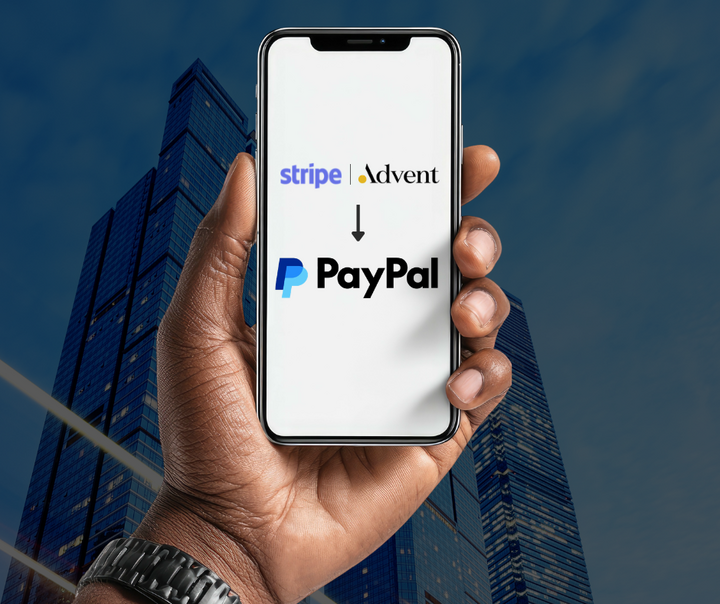
On July 15, 2026, Stripe made a $53 billion offer to acquire PayPal and its 439 million consumer accounts. PayPal rejected it. The negotiations are still open. And how this deal resolves will determine what it costs your business to accept payments for the future.
Proposed Deal Valuation
Stripe and Advent International’s joint bid to acquire PayPal, announced July 15, 2026, backed by roughly $50 billion in committed bank financing.
PayPal Active Accounts, Q2 2026
Across approximately 200 markets, representing one of the largest bases of stored consumer payment credentials on any single digital wallet platform.
Projected Combined Annual Volume
Estimated annual payment volume for a merged entity based on both companies’ reported figures, per Reuters, representing a significant concentration of payment infrastructure.
What Is the Stripe-PayPal Acquisition and Why Does it Matter in 2026?
The payment processing industry is undergoing its most significant structural shift in two decades. On July 15, 2026, Stripe and Advent International submitted a joint bid to acquire PayPal, valued at approximately $53.4 billion and backed by roughly $50 billion in committed bank financing, a deal that would unite the most powerful merchant infrastructure platform in the world with the most recognized consumer payment brand. PayPal’s board formally rejected that offer at a specially convened meeting on July 20, pushing for a higher price. No deal has closed. But the proposal itself has already shifted the competitive landscape, and what comes next will determine the infrastructure powering small business checkouts for the next decade.
This is not merely news for payment industry professionals. For small merchants, investors, and entrepreneurs, it is a signal that the platforms controlling how customers pay, and how much it costs to accept those payments, are repositioning fast. The 2026 Global Digital Shopping Index, conducted by PYMNTS Intelligence and Visa Acceptance Solutions, found that 87% of merchants say their checkout experience needs improvement and nearly 6 in 10 say their current payments technology may no longer meet their business requirements within three years. That data predates the Stripe bid. The pressure to modernize was already there. This deal has made it impossible to ignore.
Understanding what is happening, why it matters, and how to prepare now will determine which merchants thrive in a wallet-first, AI-driven commerce environment and which get left behind.
Who Are PayPal, Stripe, and Advent International?
PayPal is the consumer-facing side of the equation. Founded in 1998, it built the most recognized online payment brand in the world by storing consumer payment credentials so shoppers could check out without re-entering card details every time. It closed Q2 2026 with 439 million active accounts, $486.4 billion in quarterly total payment volume, and $8.7 billion in revenue, serving approximately 200 markets. It also operates Venmo and its own stablecoin, PYUSD, which expanded to 70 markets in March 2026. Stripe is the infrastructure most consumers have never heard of. Founded in 2010, it powers checkout behind the scenes for more than 5 million businesses and processed $1.9 trillion in total payment volume in 2025, up 34% year over year. Over the past 18 months it also acquired Bridge for stablecoin infrastructure, Privy for digital wallets, Orum for payment orchestration, and Metronome for AI-era billing, while co-incubating Tempo, a payments-focused blockchain with design partners including Visa, Deutsche Bank, and OpenAI. Advent International is the private equity firm bringing the financial structure and operational discipline this transaction requires, with more than $7.8 billion invested across 18 payments and fintech companies since 2008.
Reuters reported that a combined entity would process approximately $3.7 trillion in annual payment volume, uniting Stripe’s merchant infrastructure, AI payment tools, and stablecoin rails with PayPal’s consumer trust, wallet distribution, and embedded financing capabilities. Karen Webster, CEO of PYMNTS, described the strategic logic this way:
“They want the 420 million consumers with built-in wallets to give them a two-sided network to light up agentic shopping and agentic payments with stablecoins.”
Karen Webster, CEO | PYMNTS
Stablecoins are worth defining here because the term will come up throughout this article. A stablecoin is a digital currency engineered to maintain a fixed value, typically pegged one-to-one with the US dollar. Unlike Bitcoin, which can swing dramatically in price, a stablecoin is designed to always be worth one dollar. It combines the programmability and speed of digital currency with the stability of traditional money. Both Stripe and PayPal have been building around it as the likely settlement layer for AI-driven and cross-border commerce.
How the Stripe-PayPal Deal Could Affect Small Business Owners and Everyday Consumers
Two Small Business Perspectives
The potential impact of this proposed deal is not the same for every type of business, and the difference is worth understanding before making decisions about payment infrastructure.
An e-commerce merchant selling handmade goods, specialty products, or branded merchandise through their own website lives and dies by checkout conversion. Every customer who adds something to a cart and does not complete the purchase is direct revenue lost. PayPal’s stored credentials are already among the highest-converting checkout options available at this price tier, and Stripe powers the back end for many of the platforms this type of merchant already uses. A combined entity could produce a more seamless checkout experience with embedded financing and stronger AI fraud protection, and the conversion impact of that could be material. The risk is consolidation reducing competitive pressure to keep fees low and innovation moving for small merchant accounts. When fewer players control more of the checkout layer, the leverage shifts away from merchants.
A service-based professional, whether a contractor, attorney, consultant, or real estate investor, receives payments through PayPal or Stripe-connected invoicing platforms. For this type of business, checkout conversion is less central than fee structure, settlement speed, and billing reliability. A more integrated payment ecosystem could simplify the platforms needed to manage invoicing, payments, and business banking in one place. The risk is that consolidation narrows pricing options for service businesses with lower transaction volumes, which carry less negotiating leverage with large processors than high-volume retail accounts.
Neither outcome is guaranteed. Both depend on how a combined entity chooses to compete for small business accounts and how much pressure Apple Pay, Google Pay, and other platforms sustain. That is exactly why building on infrastructure that supports multiple payment rails now, rather than concentrating in a single processor, protects the most options going forward.
Related Reading
How to Accept Payments Online →
Not sure which payment options give your customers the most flexibility? This guide breaks down the methods worth adding before the landscape consolidates further.
What the PayPal Acquisition Could Mean for Consumers Who Use These Platforms Every Day
Millions of people use PayPal and Stripe every day without knowing it. When a clean checkout page appears on a small business’s website with no recognizable payment brand, there is a reasonable chance Stripe is processing that transaction in the background. When the PayPal button appears and a consumer clicks it, they are using stored credentials and purchase history PayPal may have held on file for years.
For consumers, wallet functionality and payment choice would likely remain stable in the near term following any potential combination. What changes over a longer horizon is who controls the data behind those transactions. The 439 million PayPal consumer accounts represent an enormous dataset of purchase history, payment preferences, and financial behavior. For AI-powered commerce tools that personalize offers, predict purchase intent, and execute transactions on a consumer’s behalf, that dataset is one of the most strategically valuable assets in the proposed deal. Consumers who rely on PayPal as a budgeting or financing tool are more deeply embedded in that ecosystem than they may realize. A combined entity would have significantly more visibility into those financial patterns than either company holds independently.
Why 70% of Customers Leave Before Completing a Purchase and What It Has to Do with PayPal
The data on where merchants are today makes the stakes of this deal concrete.
Average Cart Abandonment Rate, 2026
Roughly seven out of every ten people who add items to a cart never complete the purchase across all industries.
In Potentially Recoverable Revenue Annually
The estimated annual revenue available to merchants through checkout optimization alone, without any additional marketing spend.
Potential Conversion Rate Increase
Potential lift for a typical large e-commerce site addressing documented checkout usability issues, according to Baymard Institute. Results vary by business.
Source: Baymard Institute, 2026
The source of that abandonment is largely friction. Baymard Institute found that the average checkout flow contained 11.3 form fields in 2024, while most sites could complete an order with roughly 8. Think about the last time you purchased from an unfamiliar website. You entered your name, shipping address, card details, and email, and likely repeated portions of that for a billing address. Baymard’s research indicates that addressing documented checkout usability issues can lift conversion rates by up to 35.26% on a typical large e-commerce site, though results vary by business.
This is why stored credentials are a competitive weapon, not a convenience feature. When a customer already has a PayPal account and that option is integrated at your checkout, whether they are buying artwork, booking a legal consultation, or paying a deposit on a property, a single credential replaces that entire form. The mechanic behind that single click is the foundation of PayPal’s durability as a checkout option. It is also a central part of what makes the consumer account base so valuable to Stripe in this proposed deal.
Checkout friction is one layer of the problem. Consumer financial behavior adds another. PYMNTS Intelligence found that consumers experiencing higher financial stress are more than twice as likely as lower-stress consumers to use digital wallets for grocery and retail purchases. Merchants without wallet integration may see lower conversion among those shoppers, who can still pay by other methods but increasingly prefer wallets. With the cost of living remaining elevated heading into the back half of 2026, that preference is growing.
How AI Is Already Changing Payment Processing
The Stripe-PayPal proposal is not happening in a stable market. It is happening in a market being actively restructured by artificial intelligence, and that context explains both the timing and the urgency.
Agentic commerce refers to AI systems that make purchases on a consumer’s behalf based on rules and preferences set in advance. Instead of a person navigating your checkout, an AI agent may compare prices, complete purchases, and manage returns without the consumer directly involved in each step. Stripe unveiled what it described as the world’s first AI foundation model for payments. Its partnerships with OpenAI, Anthropic, and Shopify are oriented specifically toward enabling those AI-driven purchase flows.
of merchants can currently identify AI-generated shopping traffic and purchases.
Most merchants are not yet equipped to distinguish AI-driven traffic from human shoppers, a capability gap that widens as agentic commerce grows.
Source: 2026 Global Digital Shopping Index, PYMNTS Intelligence & Visa Acceptance Solutions
The fraud dimension follows directly. As AI-powered commerce scales, AI-powered fraud scales with it. The tools capable of generating legitimate agentic purchases are largely the same tools generating fraudulent ones. According to Ravelin’s 2026 Global Fraud Trends Report, 66% of merchants across 10 countries have already seen an increase in fraud, with 15% of UK merchants reporting significant increases. Detection capability is becoming a baseline requirement. The AI-powered digital commerce fraud shield market was valued at $10.56 billion in 2026 and is projected to reach $24.79 billion by 2030, according to Research and Markets, reflecting how quickly merchant demand for these tools is expanding.
This context also explains Stripe’s urgency around the PayPal acquisition specifically. Stripe’s AI payment infrastructure and agentic commerce partnerships are sophisticated. What Stripe does not have at PayPal’s scale is the consumer account base to train those tools against and distribute them through. PayPal’s 439 million active accounts represent a dataset and distribution channel that Stripe’s existing Link wallet, which Stripe describes as having more than 250 million users, does not fully replicate. Neither company has publicly explained the rationale behind the reported offer, but analysts have pointed to that consumer reach as a likely strategic motivation.
Featured Partner

How Apple Pay, Google Pay, and Visa Are Responding to the Stripe-PayPal Bid
The Stripe bid did not emerge from a calm market. It is the most visible expression of a payment industry that has been repositioning aggressively for several years.
PayPal has struggled to keep pace with a competitive field that now includes Apple, Google, Shopify, Affirm, Klarna, Square (Block), and Stripe itself. Apple Pay and Google Pay represent the most sustained competitive pressure. Both are integrated directly into the smartphones most consumers already carry, making checkout nearly invisible for in-person and mobile transactions without requiring a separate account login. That structural advantage has gradually eroded PayPal’s share in the segments where device-integrated solutions compete most directly, which is a significant part of what has driven the stock’s prolonged decline. Square deserves specific mention as well, it's built for the food truck owner, the boutique retailer, the contractor, and the independent service business, Square competes directly for the small business segment that would feel a Stripe-PayPal merger most acutely. If consolidation reduces competitive pressure from a combined Stripe-PayPal entity, Square is positioned to fill that gap, and for merchants already running in-person operations, it represents exactly the kind of independent payment rail worth integrating now rather than later.
Visa launched its Stablecoin Platform in beta on July 16, 2026, one day after the acquisition offer became public, giving banks, fintechs, and payment companies a new environment to mint, redeem, hold, and transfer stablecoins built directly into Visa’s existing network. The announcement came one day after Reuters reported the Stripe-Advent offer, highlighting how quickly established payment networks are expanding their stablecoin capabilities. Global Payments also completed its $24.25 billion acquisition of Worldpay from FIS and GTCR in January 2026 after announcing the transaction in 2025. Scale and infrastructure depth are no longer competitive advantages in the payments industry. They are table stakes.
For small merchants, this competitive intensity has a practical upside today. Multiple major players competing for payment volume means more options, more pricing pressure in your favor, and more innovation reaching the market at accessible price points. That leverage narrows as consolidation advances, which is why the infrastructure decisions made now carry more weight than they have in years.
Why Did PayPal Reject the $53 Billion Offer and What Happens Next?
PayPal’s board did not accept the offer quietly. Advised by Goldman Sachs and Evercore, the board formally rejected the $60.50-per-share bid on July 20, 2026, signaling that the offer undervalued the company and pushing for a price closer to $70 per share.
The board’s confidence centers on assets they believe the offer does not adequately reflect: PYUSD stablecoin distribution, which expanded to 70 markets in March 2026, Venmo, Braintree’s merchant platform, and PayPal’s consumer data position in agentic commerce. PayPal then delivered on July 28, reporting Q2 revenue of $8.68 billion against a consensus estimate of roughly $8.5 billion, adjusted earnings of $1.38 per share against a $1.28 estimate, and payment volume up 10% to $486.4 billion. The company raised its full-year adjusted earnings outlook to approximately $5.38 per share.
CEO Enrique Lores, who took the role in March 2026 after previously leading HP, addressed the deal question directly on the earnings call. He declined to comment on market speculation, then laid out where the company stands:
“We believe that executing the transformation strategy I have outlined will create significant value for our shareholders. At the same time, we remain open and objective in evaluating opportunities.”
Enrique Lores, President and CEO | PayPal Q2 2026 Earnings Call, July 28, 2026
Lores added that if the company identified a path that would create superior value for shareholders relative to its current strategy, the board would carefully consider it. The language was measured but clear. A higher offer would get a hearing. With PayPal shares climbing above $58 following the results, investors appear to be pricing in either a revised bid or a credible standalone recovery.
Neither Stripe nor Advent has publicly commented on the rejection or signaled their next move, and both declined to comment on the original Reuters report. Block had initially joined the consortium when the group first approached PayPal in April but exited before the final offer was submitted, leaving Stripe and Advent as the sole bidders. A revised offer at a higher price is possible. So is an extended negotiation while PayPal continues building its case quarter by quarter.
Even if both sides reach agreement on price, the deal faces significant hurdles before closing. A combined entity would face intense antitrust scrutiny in multiple jurisdictions. Regulators would likely focus on the combined entity’s share of e-commerce payment processing, the elimination of direct competition between two of the largest independent processors, and the potential for reduced innovation and higher fees for merchants over time. The bank financing structure carries its own risk if market conditions shift during a prolonged regulatory review. The timeline is uncertain and the final terms are genuinely unknown.
What the FTC and Global Regulators Could Require Before Any Deal Closes
A combined Stripe-PayPal entity processing an estimated $3.7 trillion annually would represent one of the most significant concentrations of payment infrastructure in US history. Under the Hart-Scott-Rodino Act, companies must file with both the FTC and the Department of Justice, after which one agency receives clearance to conduct the principal review. That agency can allow the transaction to proceed, negotiate a consent agreement setting conditions on the deal, or go to court to block it. For context on timing, Dechert’s DAMITT report found that significant US merger investigations concluded in Q1 2026 averaged 10.8 months, with a 10.2 month average for the narrower set of deals announced in 2025 and reviewed entirely under the current administration. Those are averages across all significant investigations and are not a prediction for a transaction of this size.
Regulators generally have two categories of tools. The first is divestiture, meaning a company agrees to sell off specific parts of the business as a condition of the deal proceeding. Reuters reported that the bidders themselves had considered separating PayPal’s Braintree business or other assets as a possible antitrust remedy, though that reflects bidder planning rather than any regulatory demand. The second category is behavioral remedies, which are conditions written into a consent agreement that govern how a combined company operates after closing. These vary widely by case and no regulator has indicated what, if anything, would be required here.
Review would likely extend beyond US borders. Depending on how a transaction is structured and where the companies meet filing thresholds, the European Commission and the UK’s Competition and Markets Authority could each assert jurisdiction over operations in their markets. Reuters reported that PayPal’s board identified regulatory hurdles as one of its concerns with the offer.
For small merchants, the issue is straightforward. Today, having Stripe and PayPal competing for your business gives you leverage on rates, terms, and options. That leverage disappears the moment they become one company. A transaction combining two of the most widely used online payment platforms would draw substantial regulatory attention, and the conditions attached to any approval would shape how much competitive pressure remains in the market that serves small businesses.
How to Prepare Your Business Payments Before the PayPal Acquisition Resolves
The payment infrastructure small businesses depend on is being restructured at the highest level of the industry. That restructuring will produce winners and losers among platforms. For the business owner, the practical implication is more actionable than the headlines suggest.
Your checkout is either capturing customers or losing them today, regardless of how the Stripe-PayPal negotiation resolves. The 70.22% cart abandonment rate, the fraud exposure, and the AI commerce gap are not future problems. Merchants who integrate wallet support, build on infrastructure that supports multiple payment rails, and evaluate fraud detection tools now will have more options than those who wait until the market structure is settled.
Funding those investments is its own decision. Businesses typically weigh several options depending on cost, repayment ability, and underwriting: operating cash flow, vendor financing, traditional loans, and business credit cards with introductory APR periods. Each carries different tradeoffs, and the right mix depends on your revenue stability and how quickly the investment is expected to pay back.
Business credit infrastructure is worth understanding alongside those options. A DUNS number is a nine-digit identifier assigned by Dun & Bradstreet that lenders and business partners can use to locate your company’s D&B credit file. Obtaining the number is a starting point rather than a credit outcome. According to Dun & Bradstreet, a business credit file is built over time through payment history, trade references, and company information. It is also worth noting that many business credit cards still hold the individual cardholder personally responsible for the debt, so separating business and personal liability is not automatic.
Related Reading
Do You Need a Business Banking Account? →
A dedicated business banking account is one of the first steps toward building a credit profile lenders and payment platforms actually recognize. Here is what to know before you open one.
Since 2007, Fund&Grow has helped more than 35,000 entrepreneurs secure business credit and strategic funding from third-party card issuers, enabling them to invest in competitive advantages like checkout modernization without depleting operational reserves. If building that credit foundation is the next step for your business, a free consultation is the clearest starting point.
About the Author

Ari Page is the Founder and CEO of Fund&Grow, a business credit consulting company he started in 2007. Over nearly two decades, he has helped more than 35,000 entrepreneurs secure over $2.1 billion in total business funding. His expertise in business credit cards has made him a trusted resource for entrepreneurs, real estate investors, and small business owners across the country. He is the author of "Fund&Grow: Easy & Affordable Ways to Get Money for Your Business" and regularly shares insight on entrepreneurship, business strategy, and what it actually takes to build a financially resilient business.
Fund&Grow in the News
Read our latest press coverage and media features.
Sources
- Reuters — PayPal Board Sees Stripe-Advent Offer as Inadequate, July 16, 2026
- PYMNTS — Stripe’s Next Growth Engine Could Be PayPal’s Wallet, July 2026
- PYMNTS Intelligence & Visa Acceptance Solutions — 2026 Global Digital Shopping Index
- PYMNTS Intelligence — The New Checkout: Consumer Wallet Study
- Baymard Institute — Cart Abandonment Rate & Checkout Optimization Research, 2026
- Ravelin — Global Fraud Trends Report, 2026
- Research and Markets — AI-Powered Digital Fraud Detection Market, 2026–2030
- PayPal — PayPal Reports Second Quarter 2026 Results, July 28, 2026
- American Banker — PayPal CEO Expresses Openness to Acquisition, July 2026
- Baymard Institute — Checkout Optimization: Minimize Form Fields
- Dechert LLP — DAMITT Q1 2026: Merger Investigation Timing Report, April 2026
- Stripe Newsroom — Sessions 2026 Product Announcements, April 2026
Research Note: The existence, terms, and status of the Stripe-Advent offer for PayPal are based on Reuters reporting beginning July 15, 2026, citing people familiar with the matter, and subsequent coverage across multiple financial publications. No transaction has been agreed to, and Stripe, Advent, and PayPal have declined to comment on the reported offer. PayPal financial results and quoted remarks from CEO Enrique Lores come from the company’s Q2 2026 earnings release and call on July 28, 2026. Additional market data is drawn from the sources cited above. This situation is actively developing and readers should verify current status.
Methodology and Disclosures
Fund&Grow is a business credit consulting service and is not a lender, financial advisor, legal advisor, tax advisor, or credit repair organization. Funding is sourced through third-party lenders. Individual results vary based on credit profile, issuer decisions, program availability, and market conditions. The transaction discussed is a reported offer that has not been agreed to or closed, and any discussion of potential outcomes, regulatory conditions, or market effects is speculative. Nothing in this article constitutes financial, legal, or tax advice.
Copyright © 2026 Fund&Grow. All rights reserved. This article contains Fund&Grow commentary based on cited public and third-party sources. Underlying data remains attributable to the original sources cited.