 Share
Share
Contributors: Ari Page & Kayla Page | 12 min read
On April 24, 2026, the U.S. Small Business Administration announced that it had referred approximately 562,000 delinquent pandemic-era loans totaling $22.2 billion to the U.S. Department of Treasury for collection, calling it the largest fraud-referral package in SBA history.
For entrepreneurs and small business owners, this is more than a government accounting story. It explains why SBA loan approvals are taking longer, why lenders are asking for more documentation than before, and why building a capital strategy around a single funding source has become a real vulnerability. This article breaks down what happened, who is driving the response, and what every business owner needs to know right now.
Key Takeaways
| ✓ | The SBA referred 562,000 suspected-fraud loans totaling $22.2 billion to Treasury for collection. Referral is an administrative action, not a final legal determination that every loan was fraudulently obtained. |
| ✓ | These loans were flagged during the prior administration but never referred for collection. Fewer than 1,000 of the 562,000 had ever been investigated by the SBA Office of Inspector General before this action. |
| ✓ | More than 150,000 borrowers across five states have already been suspended from all future SBA programs as part of an ongoing state-by-state enforcement campaign. |
| ✓ | For entrepreneurs applying for SBA financing today, expanded verification and longer timelines are the direct result of this era's fraud. A diversified capital strategy is the practical response. |
Pandemic-Era Loans Referred to U.S. Treasury
Total Value of the Referred Loan Package
SBA Inspector General's Estimate of Potentially Fraudulent Disbursements
What Is the $22 Billion SBA Fraud, and Why Is Everyone Talking About It?
The headlines have been hard to miss: the federal government is pursuing more than $22 billion in suspected pandemic loan fraud. But understanding what that actually means, why it matters to entrepreneurs today, and what the government is doing about it requires stepping back to look at how these programs worked and what happened to them.
Between 2020 and 2021, the SBA deployed approximately $1.2 trillion in emergency capital through two programs designed to help small businesses survive a crisis no one had prepared for. These were not routine lending programs. They were emergency lifelines built for speed, and that speed came at a cost. The loans now in collection were not newly discovered in 2026. They had already been flagged for suspected fraud during the prior administration, but this group had not been referred to Treasury as a collection package before the April 2026 action.
The SBA Office of Inspector General estimated in 2023 that approximately 17% of total disbursements across both programs may have been potentially fraudulent. SBA Administrator Kelly Loeffler has cited an even higher estimate in public statements. These figures reflect fraud indicators identified through data analysis, not final legal determinations, but they still point to an unprecedented fraud problem for the agency.
The Two Programs at the Center of This Story: PPP and COVID EIDL
The Paycheck Protection Program was designed to help businesses keep employees on payroll. Loans covered payroll and eligible business expenses over periods ranging from eight to twenty-four weeks, depending on when borrowers applied, and were fully forgivable when the program's conditions were met. For many small businesses, a forgiven PPP loan effectively functioned as a grant.
COVID Economic Injury Disaster Loans worked differently. These were low-interest loans, not grants. An advance of up to $10,000 generally did not require repayment, but the underlying EIDL loan was a debt borrowers were expected to repay. Maximum loan amounts changed during the program's life: capped at $150,000 in 2020, expanded to $500,000 in 2021, and later raised to $2 million. In total, the SBA approved more than $378 billion in COVID EIDL loans. Understanding the difference matters for entrepreneurs today. Some businesses still carry EIDL debt. Some received forgiven PPP funds they used as intended. And some, as the enforcement record now shows, received funds they were never entitled to receive.
How a National Emergency Created the Conditions for Fraud
The COVID-19 pandemic did not just disrupt the economy. It fractured the lending environment that small businesses depend on almost simultaneously, creating an urgent need for capital at precisely the moment traditional sources of it were pulling back.
By April 2020, the number of active business owners in the United States had fallen by more than 3.3 million in just two months, the largest two-month decline on record. Restaurants, retailers, gyms, salons, event venues, and countless other businesses built around in-person customers were facing near-complete revenue loss while their fixed costs, including rent, payroll, and insurance, kept running. What made it harder was what the lending market was doing at the same time. Banks tightened their conventional lending standards sharply, pulling back from smaller or higher-risk borrowers and concentrating available credit on their largest and most financially stable clients. Online lenders, which had grown steadily as a small business alternative throughout the 2010s, largely exited the market in those early pandemic months. Community banks and credit unions stepped into the gap for many small business owners, becoming critical channels for PPP distribution, but even those lenders were overwhelmed by the volume of demand.
For entrepreneurs who found traditional funding options unavailable or too slow, understanding the case for business credit over traditional loans became more relevant than ever during this period. The capital gap between what was available through conventional lenders and what growth-minded founders actually needed was real, and it created demand for faster, more flexible options. At Fund&Grow, what we observed during this period reflected a clear shift in entrepreneurial thinking. The question in the market had changed. Business owners were not asking themselves whether now was a good time to start or grow a business. Many had already made that decision. What they were searching for, at scale, was how to fund the one they were already committed to building.
When Speed Becomes the Enemy of Security
Congress passed the CARES Act within weeks of the pandemic's economic onset, and the SBA was tasked with deploying emergency capital at a pace the agency had never been designed for. The SBA's own Office of Inspector General later documented that the agency executed more than 14 years' worth of lending volume within the first 14 days of the PPP program alone.
To hit those volumes, the SBA made a deliberate trade-off: it reduced its internal verification controls to keep funds moving. The OIG described what followed as a "pay and chase" environment, meaning disbursements went out before fraud detection could keep up. The Government Accountability Office added SBA emergency lending programs to its High Risk List in 2021, a designation reserved for programs with significant vulnerability to fraud, waste, and mismanagement.
This is an important lesson that extends well beyond the pandemic: when emergency capital flows at speed through a system built without fraud-prevention infrastructure baked in, exploitation is not a risk. It becomes a near certainty. The OIG noted that the accessibility of these funds attracted an overwhelming number of fraudulent actors to both programs. Building verification into emergency programs before a crisis, not in response to one, is the only reliable way to prevent this outcome. For business owners today, the connection is direct. Every extra form, every identity check, and every extended timeline in the current SBA application process exists because those controls were bypassed in 2020.
What the Business Formation Data Actually Shows
Despite everything, entrepreneurs did not retreat during the pandemic. They adapted. According to the National Bureau of Economic Research, approximately 4.36 million new business applications were filed in 2020, a 24% jump from 2019 and the highest single-year total on record at the time. In 2021, that number climbed to approximately 5.39 million. NBER found that nonstore retail accounted for approximately one-third of the increase, reflecting how many entrepreneurs built digital-first and e-commerce businesses suited to the new environment.
U.S. New Business Applications — Census Bureau Business Formation Statistics
2020 — All-Time Record
+24% vs. 2019; one in three new businesses was a nonstore retail or digital-first model
2021 — New All-Time Record
Filed while relief programs were active; includes both authentic new businesses and some fraudulent shell entities
2024 — Three Years Later
Still more than 90% above the pre-pandemic annual average of ~2.76M, confirming authentic demand
2025 — Highest Annual Total Ever
Long after relief programs closed; H1 2026 is running ~12% ahead of H1 2025
Some pandemic-era applications represented fraudulent entities created solely to capture relief funds. But the U.S. Department of the Treasury has reported that small businesses created more than 70% of net new jobs since 2019. Formation numbers that continued climbing in 2024, 2025, and into 2026, years after any pandemic relief eligibility expired, confirm that the underlying entrepreneurial demand was real. The fraud was layered on top of it, not the cause of it.
What the Prior Administration Did, and Why It Matters Now
Federal law requires the SBA to refer delinquent suspected-fraud debts to Treasury's Bureau of the Fiscal Service once specific thresholds are met. The current SBA administration's position is that the prior administration failed to meet that obligation for the 562,000-loan group, characterizing the approach as a deliberate choice to shield borrowers from accountability.
The fuller picture is more nuanced. The Department of Justice continued prosecuting pandemic fraud cases throughout 2021 to 2024, and the SBA's collection policies changed over that period. The narrower factual point is that this specific group of flagged loans had not been referred to Treasury as a collection package before April 2026. The comparison below provides the broader enforcement context.
Prior Administration
Current Administration
The framing of the prior administration's actions as deliberate protection is the SBA's official characterization, not a judicially established finding. What is not in dispute is what the April 2026 action set in motion and what it means for entrepreneurs navigating the SBA lending environment today.
Who Is Leading the Crackdown, and What Have They Done?
Two officials have been the most visible public faces of this enforcement campaign. Understanding who they are and what they have done helps entrepreneurs read the current enforcement posture clearly and assess what comes next.
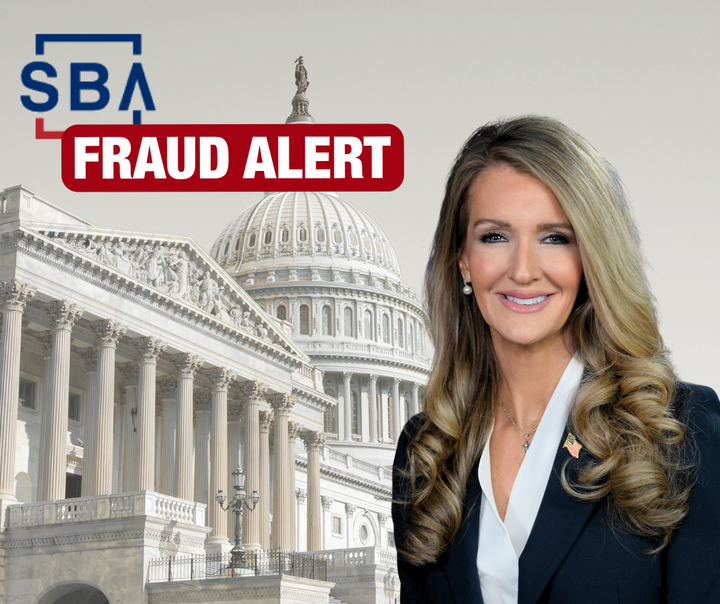
Kelly Loeffler was confirmed as SBA Administrator in early 2025 after serving as a U.S. Senator from Georgia. Since taking the role, she has made pandemic fraud accountability the agency's central operational priority. Loeffler has personally traveled to states where major enforcement actions have been announced, led the state-by-state suspension campaign, and overseen the Palantir AI deployment. She has been direct in her public statements about what happened and what the current administration intends to do about it.
"From Day One, the Trump SBA has worked tirelessly to crack down on billions in pandemic-era fraud that the Biden Administration forgave or ignored."
SBA Administrator Kelly Loeffler | April 24, 2026 SBA Press Release
JD Vance, the Vice President of the United States and former U.S. Senator from Ohio, leads the White House Task Force to Eliminate Fraud alongside FTC Chairman Andrew Ferguson. The Task Force was established by executive action in January 2025 to coordinate a national strategy for stopping fraud, waste, and abuse across federal benefit programs. In his Day One memo establishing the Task Force's priorities, Vance cited research documenting more than one million suspicious PPP loans, framing pandemic fraud accountability as a first-order priority from the opening week of the administration.
"Research findings show over 1,000,000 suspicious Paycheck Protection Program loans."
Vice President JD Vance | Day One Memo to the White House Task Force to Eliminate Fraud, January 2025
Treasury Secretary Scott Bessent is involved through Treasury's Bureau of the Fiscal Service, which manages the debt collection process once loans are formally referred.
The State-by-State Enforcement Campaign
The SBA has been moving through states systematically, suspending borrowers connected to suspected fraud and prohibiting them from participating in any future SBA program, including disaster lending and federal contracting through the 8(a) Business Development Program. Suspension is an administrative eligibility action, not a criminal conviction. Individual cases can be contested through established dispute processes. But the consequence is immediate and significant: suspended borrowers are locked out of SBA programs while their status is under review.
State-by-State SBA Suspensions — Administrative Eligibility Actions, Not Criminal Convictions
California Borrowers Suspended
Removed from all SBA program eligibility; connected to $8.6B+ in suspected PPP and EIDL fraud. Largest single-state action in SBA history.
Ohio Borrowers Suspended
Removed from SBA program access; connected to approximately $1.1B in suspected fraudulent pandemic loans.
Wisconsin Borrowers Suspended
Suspended in connection with $375M in suspected fraudulent PPP and EIDL loans. Announced July 8, 2026.
Minnesota Borrowers Suspended
Removed from SBA eligibility; connected to roughly $430M in potentially fraudulent pandemic-era loans.
Maine Borrowers Suspended
Suspended in connection with $93M in suspected fraudulent pandemic relief loans. Most recent state action as of this writing.
On July 14, 2026, the SBA formalized the deployment of Palantir Technologies AI software to analyze pandemic-era loan records, detect coordinated fraud patterns across large datasets, and generate criminal referrals to the Department of Justice faster than manual review allows. The DOJ has been pursuing civil and criminal enforcement simultaneously, reporting more than 200 pandemic-related False Claims Act settlements and judgments in fiscal year 2025. A 10-year statute of limitations keeps enforcement active into the early 2030s.
What Happens When Fraud at This Scale Goes Uncollected?
The consequences of sustained inaction on pandemic fraud extend well beyond the dollar amounts, and they fall directly on the entrepreneurs and small business owners that these programs were built to serve.
The U.S. Senate Small Business Committee documented in 2023 that failing to collect on suspected fraud in stimulus programs sets a precedent: future bad actors observe what happens when large amounts of emergency money flow without meaningful accountability and organize accordingly. The Congressional Research Service found that uncollected fraud at this scale could compromise the SBA's capacity to fund disaster assistance for future emergencies, including hurricanes, floods, and wildfires. For business owners who depend on SBA disaster lending when a natural disaster strikes their region, that is a direct and concrete concern. The CRS also reported that approximately $78.8 billion in COVID EIDL debt had been charged off through March 31, 2024. A charge-off is an accounting classification, not debt forgiveness; the debt still exists and can be pursued. But deferred recovery narrows the practical window for collection while the 10-year statute of limitations continues to run.
The third consequence is the one most visible to entrepreneurs applying for SBA financing today. Honest applicants now absorb more friction because the fraud era exposed weaknesses that the agency and its lending partners are working to correct. Accountability matters because restoring the SBA's enforcement credibility helps these programs function as designed for the next wave of business owners who need them.
If Your Business Was Targeted by Identity Fraud
Some business owners discovered during the pandemic that their EIN or business identity had been used without authorization in PPP or EIDL applications. If you suspect this happened to your business, you can report it to the SBA Office of Inspector General directly or to the FTC here. Knowing which practices make your business most susceptible to fraud is a practical starting point for protecting your credit profile and business identity before a problem develops.
What This Means for Entrepreneurs Seeking SBA Funding
The SBA's programs remain among the most cost-effective capital sources available to small businesses, and the enforcement actions underway are designed to protect their long-term value, not diminish it. But the process for accessing those programs has changed materially, and entrepreneurs who understand the current environment are in a stronger position than those who do not.
If you received a PPP or COVID EIDL loan and used it honestly for its intended purpose, the current enforcement is not directed at you. The referrals and suspensions target borrowers already linked to specific fraud indicators: identity mismatches, duplicate applications, shell company patterns, or failed Do Not Pay database crosschecks. An accurate application, properly documented and deployed as stated, is a categorically different situation. If you received a Treasury collection notice you believe was issued in error, dispute rights exist. Legal counsel is advisable before responding.
If you are currently applying for SBA financing, expanded identity and verification measures now apply across various programs, with specific requirements varying by program type. Lenders cross-reference documentation against fraud databases assembled during the pandemic period. Any discrepancy between your tax records, business formation documents, and application data can trigger secondary reviews that add time. Industry estimates suggest planning for 60 to 90 days as a realistic window from application to closing for many standard 7(a) loan submissions, though the SBA's own processing standards for complete packages can be faster. Assembling your documentation before you apply, not during the review process, is the most effective single preparation step you can take.
Current SBA Program Overview — Rates and Terms as of July 2026
| SBA 7(a) | Up to $5M for working capital, equipment, business acquisition, and real estate. Variable rates approximately 9.75% to 14.75% as of July 2026, tied to the prime rate of 6.75% plus a lender-negotiated markup within SBA caps. Actual rate depends on loan size, term, and lender. |
| SBA 504 | Fixed-rate financing for owner-occupied commercial real estate and major equipment. Approximately 6.17% to 6.20% for 10, 20, and 25-year terms as of July 2026. Rates change monthly based on debenture sales. |
| SBA Express | Up to $500,000 with faster processing than standard 7(a). Useful when timing is a factor and the loan amount fits within the program ceiling. |
| Microloans | Up to $50,000 through nonprofit intermediary lenders, at rates generally between 8% and 13%. Designed for early-stage businesses or smaller capital needs; average loan is approximately $13,000. |
Rates as of July 2026 and subject to change. All rates negotiated between borrower and lender within SBA guidelines. Sources: NerdWallet and Lendio.
How This Crackdown Ultimately Helps Legitimate Business Owners
In the short term, the fraud enforcement adds friction for every SBA applicant. In the longer term, it builds something that benefits every entrepreneur who depends on these programs: demonstrated accountability. Enforcement integrity is what maintains program funding, deters organized fraud from concentrating around the next emergency program, and gives the SBA the credibility to advocate for resources that serve legitimate business owners. For entrepreneurs building real businesses with clean documentation and honest capital use, a more fraud-resistant SBA is a more useful one.
Is Mass Fraud Enforcement the Right Approach? A Fair Look at Both Sides
The enforcement action has drawn broad support in principle. The documented scale of suspected fraud, the OIG's own estimates, and the legal obligation to refer these loans make the core action difficult to contest. But legitimate questions about the execution have been raised, and business owners should understand them.
The most substantive concern is the distinction between suspected and proven fraud. A mass referral of 562,000 loans moves at a pace that outstrips individual due process review. The flagged pool includes a wide range of situations, from organized fraud rings that fabricated entire businesses, to individuals who made honest errors during a period when eligibility requirements were changing frequently and communicated inconsistently across lenders and platforms. Being administratively suspended from SBA programs is a significant consequence that takes effect before individual cases are heard.
A related concern involves borrowers at the lower end of the loan spectrum. Some EIDL borrowers from lower-income households who took smaller loans in good faith are now navigating collection notices that can affect Social Security payments and tax refunds. The Congressional Research Service has noted that every available policy option for addressing this situation carries significant costs or risks, from fiscal concerns about broad debt relief to due process concerns about mass collection without individual case review.
The prior administration's enforcement record also provides relevant context. DOJ was actively prosecuting pandemic fraud throughout that period. Whether deferring this specific collection package was deliberate protection or a different enforcement approach through DOJ channels is a matter of ongoing political debate rather than settled fact.
Both things can be true simultaneously: the enforcement is legally grounded given the documented scale of suspected abuse, and the execution of a sweep at this scale requires individual review processes to fairly distinguish deliberate fraud from honest mistakes. Borrowers who receive collection notices have dispute rights, and engaging legal counsel before responding is not optional. It is essential.
Where the Enforcement Stands Today
The state-by-state suspension campaign is ongoing beyond the five states completed. Palantir AI is generating new investigative leads continuously and is expected to accelerate the pace of future actions. DOJ enforcement continues with the 10-year statute of limitations keeping cases active into the early 2030s. Expanded verification requirements across SBA programs are in effect and unlikely to ease significantly in the near term. The Federal Reserve has noted that credit conditions for small businesses broadly remain tight, a dynamic that the SBA's fraud-driven changes reinforce.
Vice President Vance's Day One memo indicated that the April referral represents only part of the suspicious PPP activity identified at the outset of the enforcement effort. More actions are expected, and the Palantir system is designed to surface the next wave faster than manual review alone.
The Bottom Line
SBA programs still offer some of the most affordable business financing available. A 504 loan at current fixed rates for a commercial real estate acquisition, or a 7(a) loan that undercuts most private alternatives at the same term, is worth the preparation the current environment requires.
The strategic reality for entrepreneurs is straightforward: build 60 to 90 days into your capital timeline as a baseline assumption, prepare documentation before you apply rather than during review, retain all records from any pandemic-era funding you received, and do not build a growth plan that depends entirely on a single SBA approval landing on schedule.
The entrepreneurs navigating this environment most effectively are those who treat their capital strategy the same way they treat their business: with multiple options, clear contingencies, and the flexibility to move when one path slows down.
Beyond the SBA: Flexible Funding for Growth-Minded Entrepreneurs
The tighter SBA lending environment reinforces something experienced entrepreneurs have always understood: having multiple funding options in place before capital is urgently needed creates greater flexibility.
Unsecured business credit with 0% introductory interest periods operates completely outside the SBA approval cycle. No collateral, no government process, and no 60-day wait. For a growing number of entrepreneurs, business credit offers advantages that traditional loans simply cannot match, particularly when speed and flexibility matter more than the lowest long-term rate. For real estate investors managing acquisition timelines, e-commerce founders scaling inventory and advertising spend, or service-based business owners bridging between growth phases, building a strong business credit foundation means capital is available when your business needs it, not when a lender gets around to your file.
Since 2007, Fund&Grow has helped more than 35,000 entrepreneurs and small business owners access over $2.1 billion in business funding. We help clients understand how business credit can fit alongside SBA programs, traditional bank loans, and other funding tools as part of a complete capital strategy. If you want to know what you qualify for today, a free consultation is the clearest starting point.
About the Author

Ari Page is the Founder and CEO of Fund&Grow, a business credit consulting company he started in 2007. Over nearly two decades, he has helped more than 35,000 entrepreneurs secure over $2.1 billion in total business funding. His expertise in business credit cards has made him a trusted resource for entrepreneurs, real estate investors, and small business owners across the country. He is the author of "Fund&Grow: Easy & Affordable Ways to Get Money for Your Business" and regularly shares insight on entrepreneurship, business strategy, and what it actually takes to build a financially resilient business.
Fund&Grow in the News
Read our latest press coverage and media features.
Sources
- 1. SBA: SBA Refers 562,000 Suspected Fraudulent Loans to Treasury, April 24, 2026
- 2. SBA OIG: COVID-19 Pandemic EIDL and PPP Loan Fraud Landscape, 2023
- 3. GAO: COVID Relief: Fraud Schemes and Indicators in SBA Pandemic Programs, 2023
- 4. SBA: SBA Suspends 111,620 California Borrowers, February 2026
- 5. SBA: SBA Suspends 7,800 Wisconsin Borrowers, July 8, 2026
- 6. SBA: SBA Expands Use of Palantir Software, July 14, 2026
- 7. U.S. Census Bureau: Annual Retail Trade Survey, 2022
- 8. NBER: Business Formation Surged During the Pandemic, September 2021
- 9. U.S. Treasury: Small Business and Entrepreneurship in the Post-COVID Expansion
- 10. U.S. Senate Small Business Committee: COVID-19 Fraud Three Years Later, 2023
- 11. Legis1 / Congressional Research Service: Pandemic Loan Defaults Force Congress to Act, June 2026
- 12. Lendio: Current SBA Loan Interest Rates, July 2026
- 13. NerdWallet: SBA Loan Rates, July 2026
- 14. Winston Taylor: DOJ False Claims Act Enforcement of PPP Loans into 2026
Research Note: This article draws on the primary SBA press releases cited above, the SBA OIG fraud landscape report, GAO fraud analysis, DOJ enforcement data, U.S. Census Bureau Business Formation Statistics (current revised series including 2026 methodology revisions), NBER business formation research, U.S. Treasury reporting, Congressional Research Service analysis, and SBA rate data from Lendio and NerdWallet verified as of July 2026. Claims characterizing the prior administration's approach reflect the current SBA administration's official public statements and are attributed accordingly. All data and statistics are attributed to their original publishers as cited above.
Methodology and Disclosures
Fund&Grow is a business credit consulting service and is not affiliated with the SBA, U.S. Treasury, or any government agency. This article is for informational purposes and reflects publicly available data verified as of July 24, 2026. Suspected fraud referrals or suspensions are not final findings of liability or guilt. Nothing in this article constitutes legal, financial, or tax advice.
Copyright © 2026 Fund&Grow. All rights reserved. This article contains Fund&Grow commentary based on cited public and third-party sources. Underlying data remains attributable to the original sources cited.